LiveCurrent workFull stack engineer · team contribution

Evoriqa

Support agents answer from the customer's own documents, on a live multi-tenant platform.

  • Next.js
  • TypeScript
  • PostgreSQL
  • pgvector
  • OpenAI
  • AWS SNS
  • Stripe
  • Livein production
  • DLQno silent event loss
  • RAGanswers from tenant documents

01

At a glance

Problem
Support needs reliable retrieval, tenant isolation and background processing.
My role
Full stack engineer
Timeline
2025 to now, live
Team
Product team at TechParser LLC

02

Architecture

Reverse proxyroutes to servicesNext.js appagents and adminIngestion workersasync RAGSNS, Pub/Subqueues and DLQsWebhooksStripe billingPostgres + pgvectorsearchOpenAIanswers

Reverse proxy → Next.js app. Next.js app → Ingestion workers. Next.js app → SNS, Pub/Sub. Next.js app → Webhooks. Ingestion workers → Postgres + pgvector. SNS, Pub/Sub → OpenAI

03

Hard parts

  1. 01

    Document ingestion

    Problem
    Large files cannot block a request.
    Decision
    Async ingestion by workers into pgvector.
    Why it holds
    Upload returns fast and search stays current.
  2. 02

    Failed events

    Problem
    A dropped event means a lost notification.
    Decision
    Event-driven flows on AWS SNS and Pub/Sub, with queues, retries and DLQs.
    Why it holds
    Failures are kept and replayable.
  3. 03

    Billing and webhooks

    Problem
    Billing events arrive late, twice or forged.
    Decision
    Secure webhooks with retries and rate limiting around Stripe.
    Why it holds
    The app trusts only verified events.
  4. 04

    Many services, one door

    Problem
    Microservices need one public surface.
    Decision
    A reverse proxy routing requests across services.
    Why it holds
    Services scale and change behind it.

04

Results

  • Livein production
  • DLQno silent event loss
  • RAGanswers from tenant documents

05

Tech stack

  • Next.js
  • TypeScript
  • PostgreSQL
  • pgvector
  • OpenAI
  • AWS SNS
  • Stripe

06

The product

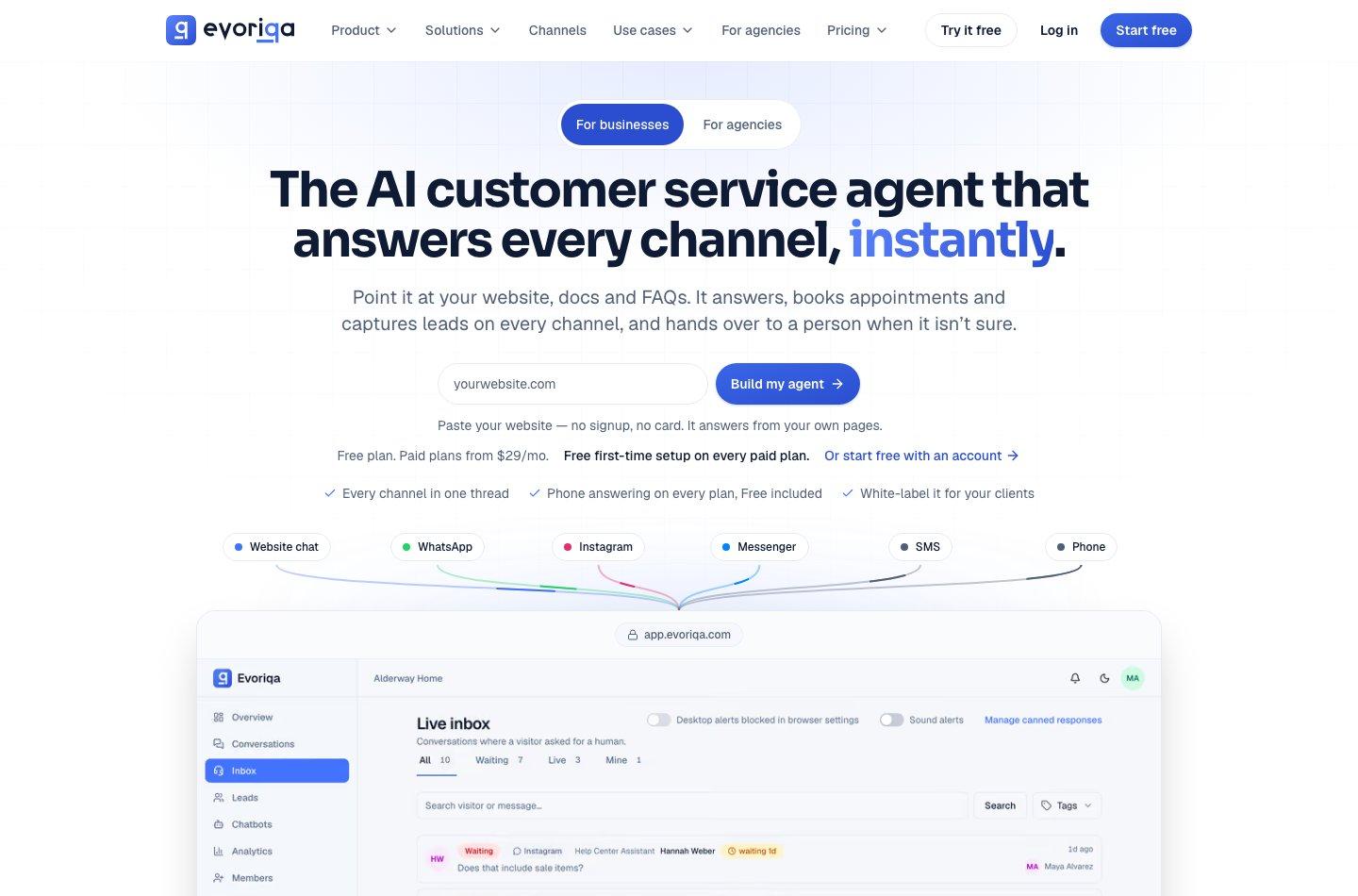
Evoriqa home page

07

What I'd do next

  • Measure retrieval latency per tenant.
  • Add replay tooling for dead-lettered events.
Read the full write-up

The workflow

A support agent needs to find an answer in the customer’s own documents. On the Evoriqa team, I contributed to the path from document ingestion to knowledge retrieval. PostgreSQL and pgvector support the search behind that workflow.

My contribution

My work also covered event-driven processing with AWS SNS, webhooks and billing integrations. Those parts sit behind the agent interface: a document becoming available for retrieval and a billing event reaching the application are separate product workflows.

The cover shows Evoriqa’s public website. The live site gives an overview of the team’s product.

Need a system like this?

I build systems like this for founders and teams.

Tell me what you're building